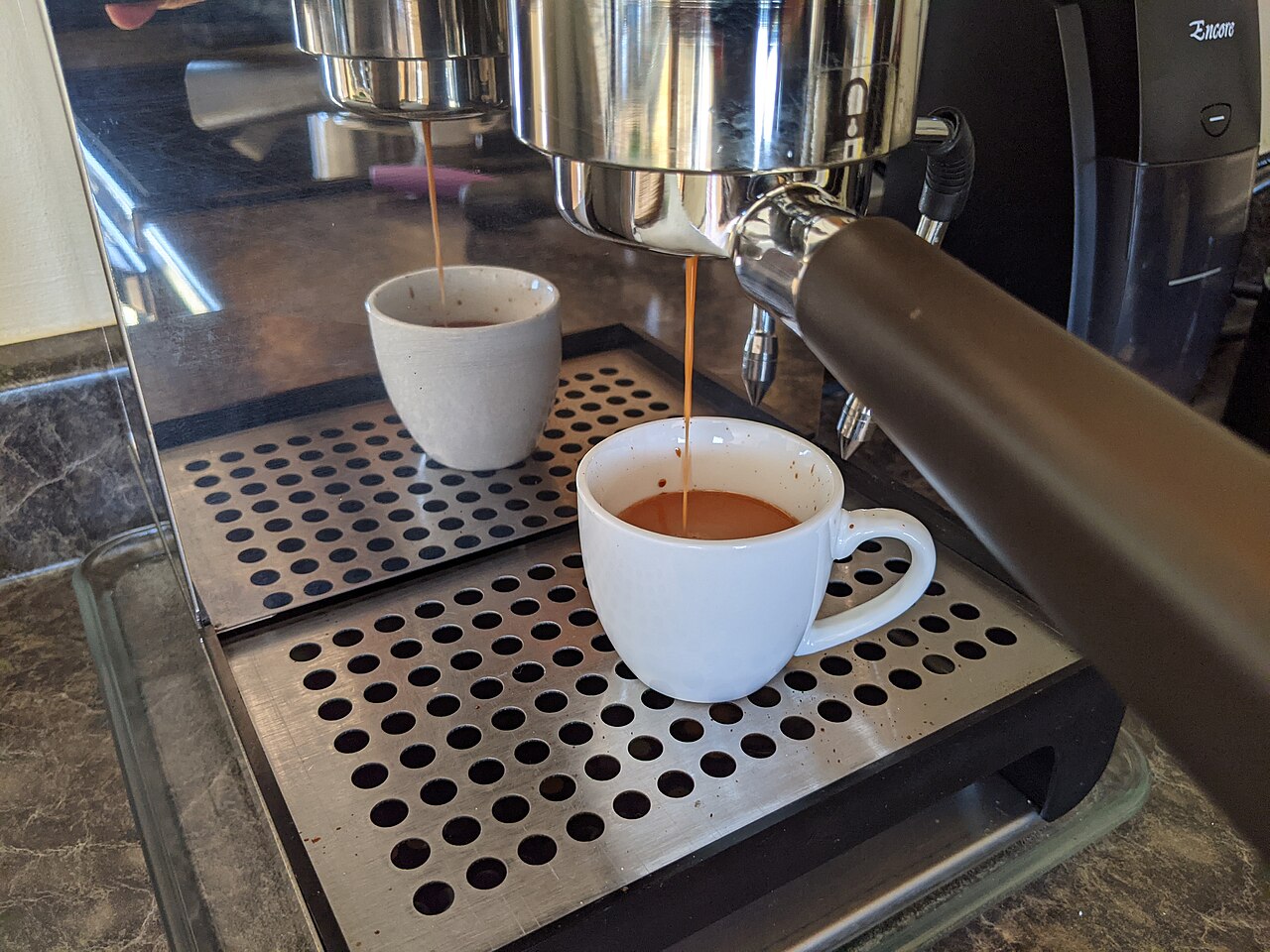
You do not need a $1,500 machine to make real espresso at home — but the sub-$500 market is full of traps: inflated bar ratings, unpressurized baskets paired with weak grinders, and “espresso” machines that are really just strong coffee makers. This guide covers what actually matters under $500, the specs worth paying for, and the mistakes that waste beginners’ money.
What real espresso requires (and what the marketing hides)
Espresso is hot water forced through finely ground coffee at about 9 bars of pressure, yielding a small, concentrated shot with crema in roughly 25–30 seconds. The “15-bar” and “19-bar” figures on boxes describe the pump’s maximum, not the brewing pressure — every real espresso machine regulates down to around 9 bars. Ignore the bar number as a buying criterion; it tells you nothing about shot quality.
What matters is temperature stability, an even water distribution over the coffee puck, and — above all — the grind. An entry machine with a good grinder makes better espresso than a mid-range machine with a bad grinder. Budget accordingly: if you have $500 total, the grinder deserves a serious share of it. Our burr grinder guide explains why.
Pressurized vs non-pressurized baskets: the beginner’s fork in the road
Entry machines usually ship with pressurized (dual-wall) baskets, which have a tiny valve that creates back pressure and fakes crema even with imperfect grind or tamping. They are forgiving: pre-ground coffee and inconsistent grinds still produce something drinkable. The ceiling is low, though — you will never get the sweetness and clarity of a proper shot.
Non-pressurized (single-wall) baskets give you full control and full flavor potential, but they punish every inconsistency in grind, dose, and tamp. Most beginners should start pressurized, learn the workflow, then switch to the non-pressurized basket (usually included in the box) once their grinder and technique catch up. That upgrade costs nothing and is the biggest free improvement in home espresso.
The specs that actually matter under $500
Look for a 58mm or well-supported 54mm/51mm portafilter size — odd sizes lock you out of the aftermarket accessories (tampers, distribution tools, precision baskets) that make learning easier. A three-way solenoid valve, which relieves pressure after the shot, gives you a dry puck that knocks out cleanly instead of a soupy mess; its absence is the clearest sign of a toy machine. Fast heat-up (thermoblock or small boiler) matters for real mornings — a machine that takes 20 minutes to warm up will not get used on weekdays.
Milk steaming at this price comes from a panarello-style wand: fine for cappuccino foam, hopeless for latte-art microfoam. That is a fair trade at $300, but know it going in. If milk drinks are your whole goal, a good milk frother plus strong brewed coffee may serve you better than a weak steam wand.
The traps that waste beginners’ money
The most expensive trap is buying the machine first and the grinder never. Pre-ground coffee or a blade grinder through a non-pressurized basket produces sour, channeling shots, and beginners blame the machine. The second trap is the all-in-one machine with a built-in grinder: at this price the grinder is always the weak link, and when it underperforms you cannot upgrade it separately. The third trap is upgrading too fast — buying a $700 machine six months in because the $300 one “isn’t good enough,” when the actual problem was stale beans and an inconsistent grind.
A realistic starter budget
Here is how $500 breaks down sensibly: roughly $200–250 for the machine, $150–200 for a capable grinder, and the rest for the unglamorous essentials — a scale (see our coffee scale guide), fresh beans, and a decent tamper if the included plastic one is flimsy. Skip the distribution gadgets and precision baskets until your shots are consistent; technique first, accessories later.
What this guide does not cover
This covers pump-driven home machines under $500 — not lever machines, not prosumer heat-exchanger or dual-boiler machines, and not commercial equipment. It does not cover plumbing in, water filtration chemistry beyond the basics, or repairing machines. It also does not teach latte art; that is a milk-texturing skill that deserves its own practice routine. If you are choosing equipment for a café or food truck, talk to a commercial espresso dealer.
Frequently asked questions
Can I make espresso without a grinder?
You can make pressurized-basket espresso with fresh pre-ground coffee from a roaster, and it will be decent for a few days after opening. For non-pressurized baskets — where the real flavor is — a grinder is non-negotiable.
How long does an entry machine take to heat up?
Most thermoblock entry machines are ready in 1–3 minutes, though pulling a blank shot through the portafilter to warm it improves consistency. Small-boiler machines can take 10–15 minutes.
Do I need special beans for espresso?
No — “espresso roast” is a roast style, not a bean requirement. Any fresh coffee can be brewed as espresso; darker roasts are more forgiving for beginners, while lighter roasts need more precise technique.
Why does my espresso taste sour?
Sourness usually means under-extraction: grind finer, increase the dose slightly, or lengthen the shot. If the shot runs faster than 20 seconds, the water is channeling through too quickly — the grind is the first thing to fix.