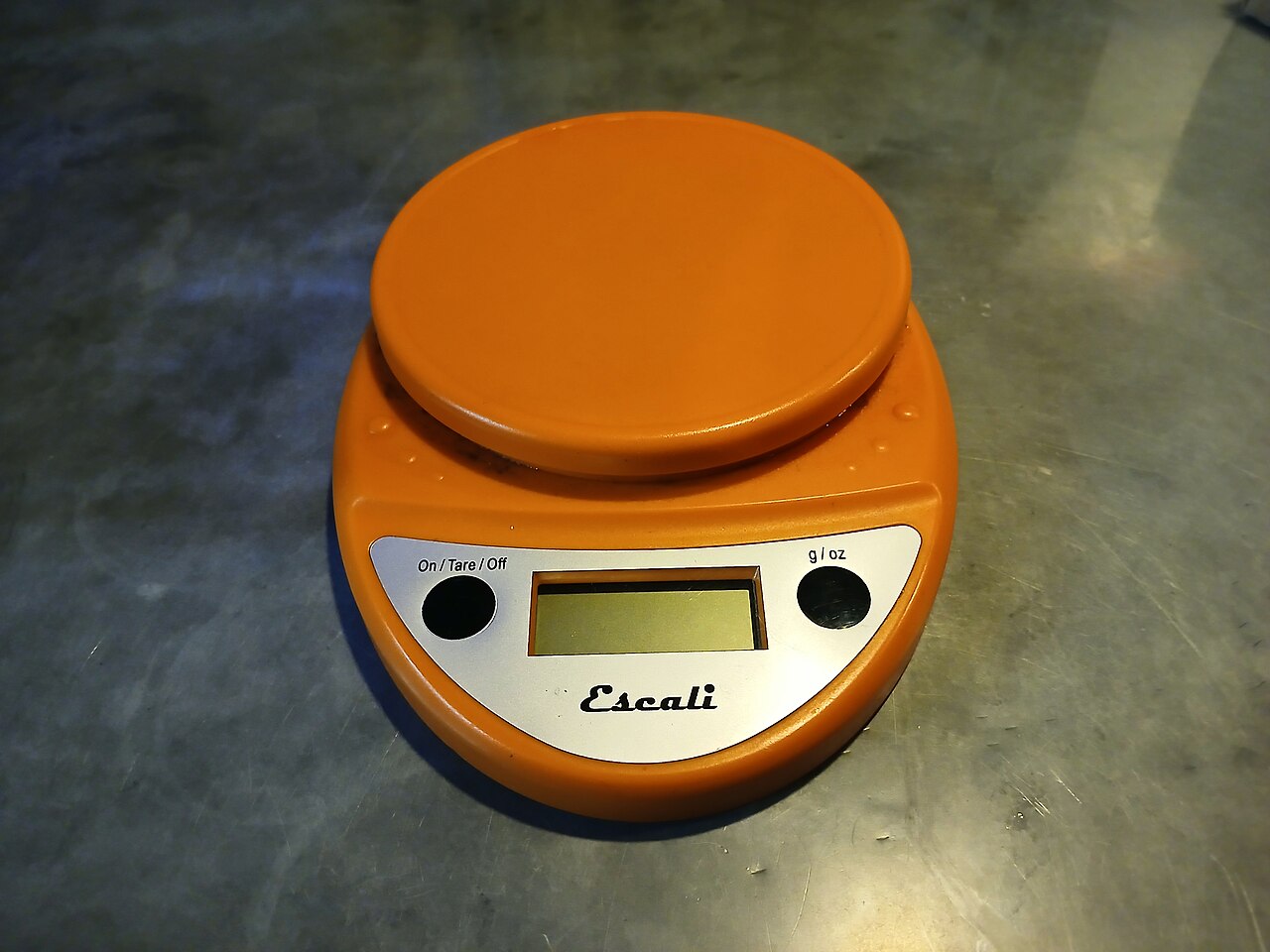
Scoops lie. A “tablespoon” of coffee can weigh anywhere from 7 to 12 grams depending on the bean and the grind, which means scoop-based brewing can swing 50% in strength from cup to cup. A coffee scale fixes the two variables you can actually control — coffee dose and water weight — for the price of a few bags of beans. This guide explains which scale features matter and when a cheap one is enough.
Why grams beat scoops
Brewing is a ratio: a certain mass of coffee to a certain mass of water. Volume measurements fail because coffee beans vary in density and size — a scoop of dense, small light-roast beans weighs far more than a scoop of large, airy dark-roast beans. Weighing in grams removes the guesswork: 20 grams is 20 grams, every time, regardless of bean or grind.
The payoff is repeatability. When a cup tastes great, you can brew it again exactly. When it tastes off, you can change one variable — grind, ratio, temperature — and know the others stayed fixed. Without a scale, every adjustment is a guess built on a guess. This is why the scale is the cheapest meaningful upgrade in coffee gear: it makes every other piece of gear work better.
The features that matter: resolution, speed, and timer
Resolution of 0.1 grams is the standard worth having. Whole-gram resolution is fine for French press, but pour-over and especially espresso need the finer steps — a 1-gram swing in an 18-gram espresso dose is a 5% change, enough to taste. Speed matters too: a scale that takes two seconds to settle makes espresso dosing miserable, while a fast-responding scale keeps up with the pour.
A built-in timer earns its place for pour-over and immersion brewing, where bloom time and total drawdown time are part of the recipe. It is one less phone to juggle with wet hands. For espresso, the timer is less critical — most people time shots separately — but auto-tare (resetting to zero when you set the cup down) is genuinely convenient.
Size, capacity, and espresso fit
Not every scale fits under an espresso machine’s portafilter. Measure your machine’s clearance — many entry machines have barely two inches between drip tray and portafilter spouts. Compact espresso-oriented scales exist precisely for this. For pour-over and French press, any flat scale works; just make sure the weighing platform fits your dripper or carafe with room to pour.
Capacity around 2–3 kg covers all brewing (a liter of water is a kilogram, plus vessel weight). Waterproofing or at least splash resistance is worth having — coffee brewing is wet work, and a scale that dies from one spill is a bad investment. Silicone mats help, but a sealed body helps more.
When a cheap scale is enough
Here is the honest part: a basic $15 kitchen scale with 1-gram resolution is enough for French press, drip machines, and learning pour-over ratios. The expensive coffee scales buy you 0.1g resolution, faster response, a timer, and compact espresso-friendly sizing. If you brew immersion methods and are not chasing espresso, the cheap scale plus good technique will serve you for years.
Upgrade when the scale becomes the limiting factor: your pour-over recipes call for tenth-gram precision, you start brewing espresso, or the slow response is driving you mad. Until then, spend the difference on better beans — see our bean storage guide to keep them fresh.
What this guide does not cover
This covers scales for brewing — not lab balances, not built-in grinder scales, and not the Bluetooth-connected apps some premium scales offer (a fun extra, not a brewing essential). It does not cover calibration weights or professional QA equipment. If your scale drifts, check the batteries and the surface levelness before assuming it is broken.
Frequently asked questions
What brew ratio should I start with?
1:15 to 1:16 (coffee to water, by weight) suits most pour-over and drip brewing — for example, 20g coffee to 300–320g water. French press drinkers often prefer 1:12 to 1:14 for a heavier cup. Adjust to taste from there.
Do I really need 0.1g precision?
For espresso, yes — small dose changes move the shot noticeably. For pour-over, it helps consistency but 0.5g is workable. For French press, whole grams are fine.
Can I just use my kitchen scale?
Absolutely, if it reads in grams and responds reasonably fast. Many people brew excellent coffee for years on a basic kitchen scale. Upgrade only when you feel its limits.
Why does my scale give different readings on different surfaces?
Scales are sensitive to tilt and vibration. Use it on a hard, level surface away from the edge, keep phones and speakers (magnets, vibration) away from it, and let it settle a second before reading.