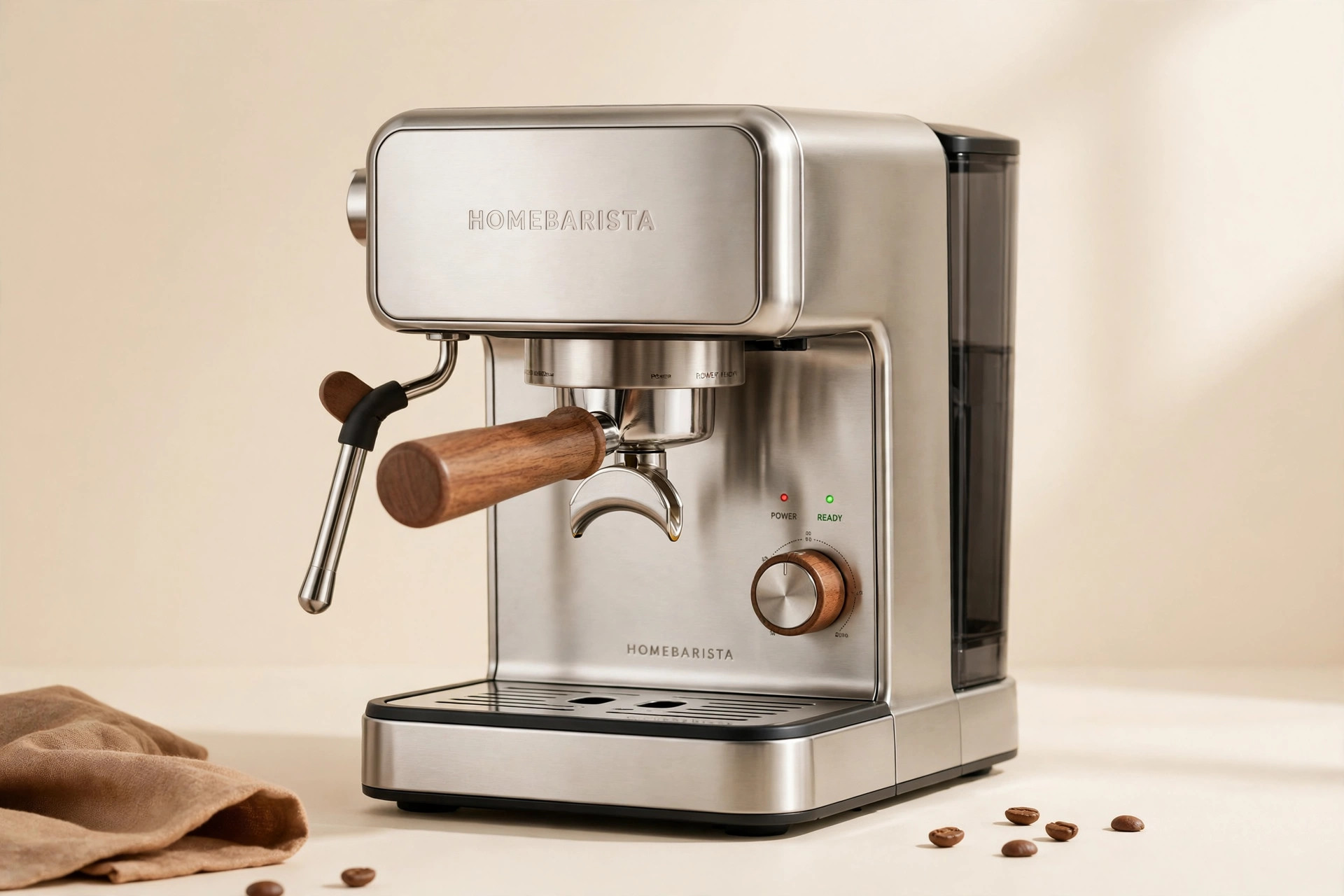
Under $500 gets you into real espresso; under $1,000 gets you into espresso you will still be happy with in five years. This is the sweet-spot band: machines with proper boilers or fast thermojets, real steam wands, and build quality that survives daily use. But the band also has its own traps — the most expensive being the idea that a $900 machine fixes a $100 grinder. Read the grinder rule below before you read anything else.
Brew Dialed is reader-supported. When you buy through links on our site, we may earn an affiliate commission.
Last updated: October 23, 2026. Prices and availability checked October 2026.
Quick picks
In a hurry? These are this guide’s picks, in order — the full reasoning is in the sections below. Prices move fast, so check the current price before you decide.
| Machine | Our take | Typical price |
|---|---|---|
| Breville Barista Express (BES870) | Best all-in-one | ~$700–$800 → |
| Gaggia Classic Pro | Best for hobbyists | ~$450–$500 → |
| Rancilio Silvia | Best built to last | ~$850–$950 → |
| Breville Bambino Plus | Best compact | ~$450–$550 → |
| De’Longhi La Specialista Arte | Best push-button convenience | ~$650–$750 → |
The grinder rule (read before buying anything)
Here is the rule that decides every purchase in this band: the grinder matters more than the machine. A $500 machine with a $300 espresso-capable grinder makes better shots than a $900 machine with a $100 grinder, full stop. Espresso needs fine, consistent, adjustable grind; if your grinder cannot deliver it, no machine compensates. Budget for the pair, not the machine alone.
Two practical corollaries. First, an all-in-one machine (grinder included) is genuinely convenient — the Barista Express is popular for exactly this reason — but the built-in grinder is the ceiling of that machine, and you cannot upgrade it later. Second, if you already own a good espresso grinder, the Gaggia Classic Pro becomes one of the best values in all of home espresso: a proven machine with a commercial-size portafilter and a modding community that rivals vintage cars. See our espresso grinder guide before you spend a dollar here.
Why this price band is the sweet spot
Stepping up from entry level buys three things. First, temperature stability: bigger boilers or better-controlled thermojets hold brewing temperature shot to shot, which is the difference between sweet and sour on light roasts. Second, real steam power: proper steam wands with dry steam, not the panarello frothers of entry machines — this is where milk drinks get genuinely good. Third, longevity: brass boilers, standard portafilter sizes, and parts that exist in ten years, not appliances that get replaced when a gasket dies. If you are coming from our under-$500 guide, this is the honest next tier — not a sideways move.
The five picks
1. Breville Barista Express (BES870) — best all-in-one
The machine that put home espresso on the map for a generation of drinkers: a capable thermocoil machine with a built-in conical burr grinder, so one box does everything. It pulls genuinely good shots with fresh beans, steams respectable microfoam, and heats in seconds — weekday mornings actually happen. Best for: the drinker who wants one purchase, one counter footprint, and great coffee without assembling a system. Watch out: the built-in grinder is the ceiling — good, not great, and not upgradeable. Pair it with fresh beans and do not expect it to grow with you into single-dosing obsession.
2. Gaggia Classic Pro — best for hobbyists
The tinkerer's legend: a single-boiler machine with a commercial 58mm portafilter, a real three-way solenoid, and a modding community that has solved every weakness (PID kits, OPV adjustments, shower screens). Out of the box it is capable but demanding — temperature surfing is a learned skill — which is exactly why hobbyists love it. Best for: the buyer who already has (or will buy) a real espresso grinder and enjoys the ritual. Watch out: the single boiler means brewing and steaming are sequential, not simultaneous — milk-drink households will feel the wait.
3. Rancilio Silvia — best built to last
The buy-it-for-life machine: an iron-frame, brass-boiler single boiler that owners keep for a decade or more, with parts availability that borders on legendary. The current version adds a proper PID controller, fixing the old temperature-surfing complaint. It makes café-quality shots in skilled hands and steams like a machine twice its price. Best for: the drinker who would rather buy once and learn deeply. Watch out: it demands a good grinder and rewards technique — it will not flatter sloppy prep the way an all-in-one does, and it sits at the top of the budget.
4. Breville Bambino Plus — best compact
The small-footprint standout: a thermojets machine that heats in about 3 seconds and steams automatically with surprising quality, all in a chassis barely wider than the portafilter. For apartments, small kitchens, or anyone whose counter is a battlefield, it delivers shots far above its size and price. Best for: small spaces and fast mornings — the quickest great espresso in this roundup. Watch out: it needs a separate grinder (budget accordingly), and the compact water tank means frequent refills in a multi-drink household.
5. De’Longhi La Specialista Arte — best push-button convenience
The convenience play: built-in grinder with sensor dosing, an active temperature control, and a my-latte-art steam wand that helps beginners texture milk. It is the easiest path in this roundup from beans to a genuinely good latte with minimal learning curve. Best for: milk-drink lovers who want great results with less ritual. Watch out: like all all-in-ones, the grinder is the ceiling; and the proprietary-feeling ecosystem means fewer aftermarket upgrades than the Gaggia or Rancilio world.
The traps at this tier
The most expensive trap is buying the machine and cheaping out on the grinder — the grinder rule above, restated for emphasis. The second trap is the super-automatic temptation: at this price, super-automatics are convenient but produce a noticeably worse cup than a semi-automatic with a real grinder; you are paying for convenience, not quality. The third trap is ignoring the water: hard water scales boilers and kills machines — a simple filter or softened water is the cheapest longevity upgrade you can buy, and it improves taste too. The fourth trap is upgrading sideways: if your current entry machine's real problem is stale beans and an inconsistent grind, a $900 machine changes nothing. Fix the inputs first.
What this guide does not cover
This covers semi-automatic home machines under $1,000 — not super-automatics (except as a noted trade-off), not lever machines, and not prosumer heat-exchanger or dual-boiler machines, which start above this band. It does not cover plumbing in, water-filtration chemistry beyond the basics, or machine repair beyond owner-level maintenance. If you are choosing equipment for a café or food truck, talk to a commercial espresso dealer.
Frequently asked questions
Do I really need a separate grinder?
For everything except the all-in-one picks (Barista Express, La Specialista Arte), yes — a proper espresso-capable grinder is non-negotiable. Pre-ground coffee goes stale in days, and blade grinders cannot produce the fine, consistent grind espresso needs. Budget $200–350 for the grinder and see our espresso grinder guide.
How long do these machines take to heat up?
Thermojet/thermoblock machines (Bambino Plus, Barista Express) are ready in seconds to a few minutes. Single-boiler machines (Gaggia Classic Pro, Rancilio Silvia) need 10–15 minutes to fully stabilize — a smart plug on a timer is the classic owner trick for morning readiness.
Are super-automatic machines worth it instead?
They are worth it for convenience: one button, one cup. But at this price they cannot match a semi-automatic with a real grinder for shot quality, and they are harder to repair when (not if) something wears out. Buy the super-automatic for the workflow, not for better coffee.
Which of these is easiest to repair?
The Gaggia Classic Pro and Rancilio Silvia, by a wide margin — both have deep parts availability, active owner communities, and designs meant to be serviced. The Breville machines are excellent performers but are generally replace-not-repair when major components fail.